
$109 New Patient Special

Flexible Payment Options with Care Credit
191 Google Reviews 4.9 stars
Deep Cleaning and Gum Disease Treatment
Your gums should not bleed when you brush. If they do, or if you have noticed soreness, swelling, or your gum line pulling away from your teeth, your mouth is telling you something important. These are the early warning signs of gum disease, and the longer they go untreated, the harder the problem becomes to reverse. At Streelman DDS in Oceanside, CA, Dr. Steven Streelman diagnoses and treats gum disease at every stage, from early gingivitis to advanced periodontitis, using gentle and effective techniques designed to protect your teeth and your long-term health. If something feels off, do not wait. Schedule an appointment today.

What Is Gum Disease?
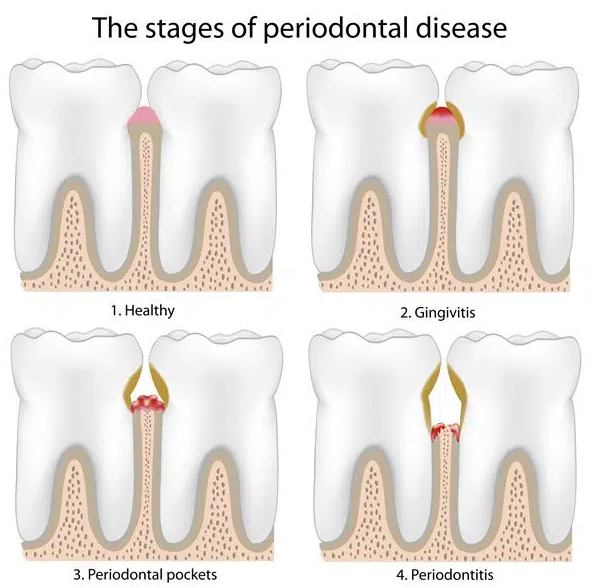
It begins as gingivitis, a mild inflammation of the gums caused by plaque buildup. When left untreated, this inflammation can progress to periodontitis, where infection spreads deeper beneath the gum line and begins destroying the bone that supports your teeth. Over time, this can lead to gum recession, tooth mobility, and even tooth loss.
The major difference between gingivitis and periodontitis is bone loss. While gingivitis causes red or bleeding gums without structural damage, periodontitis involves a breakdown of the bone and connective tissues that hold your teeth in place. Unfortunately, this process often develops silently—many patients notice no pain or symptoms until significant damage has already occurred.
Signs and Symptoms of Gum Disease
Gum disease does not always cause pain in its early stages, which is why many patients do not realize they have it until it has progressed. Common warning signs include:
- Bleeding gums when brushing or flossing
- Swollen, red, or tender gums
- Persistent bad breath that does not go away with brushing
- A receding gum line or teeth that appear longer than before
- Loose or shifting teeth
- Pain or discomfort when chewing
- Pus between your teeth and gums
- Sensitivity along the gum line
Learn more about the warning signs of gum disease
If you are experiencing any of these symptoms, do not wait. Early treatment is significantly more effective and far less invasive than treating advanced gum disease. Contact our Oceanside office to schedule an evaluation.
What Causes Gum Disease?
The primary cause of gum disease is plaque, a sticky film of bacteria that builds up on teeth and along the gum line when it is not removed through regular brushing and flossing. Over time, plaque hardens into tartar, which can only be removed by a dental professional. Several factors can increase your risk, including smoking and tobacco use, uncontrolled diabetes, certain medications that reduce saliva flow, hormonal changes, and a genetic predisposition to gum disease. Understanding your risk factors helps Dr. Streelman build a prevention and treatment plan that is right for your specific situation.
Gum Disease Treatment Options at Streelman DDS
The right treatment for gum disease depends on how far the condition has progressed. Dr. Streelman will evaluate the health of your gums and bone at your appointment and recommend a personalized plan. Here is an overview of the treatment options available at our Oceanside practice.
Scaling and Root Planing (Deep Cleaning)
Scaling and root planing is the first-line treatment for moderate gum disease. Unlike a standard cleaning, which focuses on the tooth surface above the gum line, a deep cleaning removes plaque and tartar from below the gum line and smooths the root surfaces of your teeth to help gum tissue reattach. Most patients notice significant improvement in gum health within a few weeks. The procedure is typically performed under local anesthetic and is well tolerated by most patients.
Periodontal Maintenance
After active gum disease treatment, ongoing periodontal maintenance appointments are essential to keep the condition from returning. These are typically scheduled every three to four months rather than the standard six-month interval. During each visit, Dr. Streelman and his team clean below the gum line, monitor pocket depths, and check for any signs of recurrence. Patients who stay consistent with periodontal maintenance have significantly better long-term outcomes than those who return to standard cleaning schedules too soon.
Antibiotic Therapy
In some cases, localized antibiotic treatment is used alongside scaling and root planing to eliminate bacteria in deep gum pockets. This may involve a topical antibiotic placed directly into the affected area after a deep cleaning. Antibiotic therapy is not a standalone treatment but can meaningfully improve outcomes when combined with other interventions.
Gum Recession Treatment
Gum recession occurs when the gum tissue pulls back from the tooth, exposing the root surface. This can cause sensitivity, increase the risk of decay on exposed roots, and lead to bone loss over time. Early-stage recession can often be managed with improved oral hygiene techniques and professional monitoring. More advanced cases may require a referral to a periodontist for gum grafting. Dr. Streelman will evaluate the severity of your recession and recommend the most appropriate course of action at your appointment.
Periodontal Abscess Treatment
A periodontal abscess is a pocket of infection in the gum tissue that requires prompt treatment. Symptoms include sudden and severe pain, swelling, a bad taste in the mouth, and in some cases fever. If you suspect you have a periodontal abscess, call our Oceanside office immediately. Treatment typically involves draining the abscess, a thorough cleaning of the affected area, and in some cases antibiotics to clear the infection. Do not wait on this one — an untreated abscess can spread and cause serious complications.
Why Treating Gum Disease Matters for Your Overall Health
Gum disease is not just a dental issue. Research has established links between periodontal disease and serious systemic health conditions, including heart disease, stroke, type 2 diabetes, respiratory infections, and complications during pregnancy. The bacteria involved in gum infections can enter the bloodstream and trigger inflammatory responses elsewhere in the body. Treating gum disease is not just about saving your teeth — it is an investment in your overall health. At Streelman DDS, we take a whole-health approach to dental care, and gum health is a core part of that conversation.
What to Expect at Your Gum Disease Appointment in Oceanside
At your first appointment, Dr. Streelman will perform a comprehensive periodontal evaluation. This includes measuring the depth of the pockets between your teeth and gums, assessing bone levels with digital X-rays, checking for signs of recession, bleeding, or inflammation, and reviewing your medical history for contributing risk factors. Based on this evaluation, he will walk you through a clear diagnosis and a treatment plan with specific next steps. There are no surprises at our office. You will know exactly what needs to be done, why it needs to be done, and what to expect before any treatment begins.
If the idea of dental treatment makes you anxious, ask us about sedation dentistry options available at our Oceanside practice. Many patients find that sedation makes gum disease treatment significantly more comfortable, especially for deeper cleaning procedures.
What to Expect at Your Gum Disease Appointment in Oceanside
At your first appointment, Dr. Streelman will perform a comprehensive periodontal evaluation. This includes measuring the depth of the pockets between your teeth and gums, assessing bone levels with digital X-rays, checking for signs of recession, bleeding, or inflammation, and reviewing your medical history for contributing risk factors. Based on this evaluation, he will walk you through a clear diagnosis and a treatment plan with specific next steps. There are no surprises at our office. You will know exactly what needs to be done, why it needs to be done, and what to expect before any treatment begins.
If the idea of dental treatment makes you anxious, ask us about sedation dentistry options available at our Oceanside practice. Many patients find that sedation makes gum disease treatment significantly more comfortable, especially for deeper cleaning procedures.
Frequently Asked Questions About Gum Disease Treatment in Oceanside
Is gum disease reversible?
Gingivitis, the earliest stage of gum disease, is fully reversible with professional cleaning and improved home care. Once gum disease has progressed to periodontitis, the damage to bone and tissue cannot be fully reversed, but it can be stopped and managed effectively with the right treatment plan.
Does gum disease treatment hurt?
Scaling and root planing is performed under local anesthetic, so you should not feel pain during the procedure. Some sensitivity and mild soreness in the days following a deep cleaning is normal and typically resolves quickly. If you are concerned about discomfort, talk to Dr. Streelman about sedation options before your appointment.
How many appointments does gum disease treatment take?
This depends on the severity of the disease. Mild to moderate cases may be treated in one or two deep cleaning appointments, often one side of the mouth per visit. More advanced cases may require additional visits and ongoing periodontal maintenance every three to four months going forward.
Can gum disease come back after treatment?
Yes, which is why periodontal maintenance is so important. Gum disease is a chronic condition for many patients, meaning it requires ongoing monitoring and professional care to keep it under control. Patients who stay consistent with their maintenance schedule and practice good home hygiene have the best long-term outcomes.
Does insurance cover gum disease treatment?
Most dental insurance plans cover at least a portion of periodontal treatment, including scaling and root planing. Coverage varies by plan. Our front desk team at Streelman DDS will help you understand your benefits before treatment begins so there are no unexpected costs.
What is the difference between a periodontist and a general dentist for gum disease?
A periodontist is a specialist who focuses exclusively on gum disease and related conditions. A general dentist like Dr. Streelman can diagnose and treat mild to moderate gum disease, including performing deep cleanings and managing ongoing periodontal maintenance. More complex or advanced cases may warrant a referral to a periodontist. Dr. Streelman will be straightforward with you about what level of care is most appropriate for your situation.
How do I know if I have gum disease?
Many patients have no pain or obvious symptoms in the early stages, which is why regular dental exams are so important. If you notice bleeding gums, bad breath, recession, or sensitivity along the gum line, these are signs worth having evaluated. The only way to know for certain is a periodontal exam with pocket depth measurements and X-rays.
Schedule your gum disease evaluation at Streelman DDS in Oceanside today.